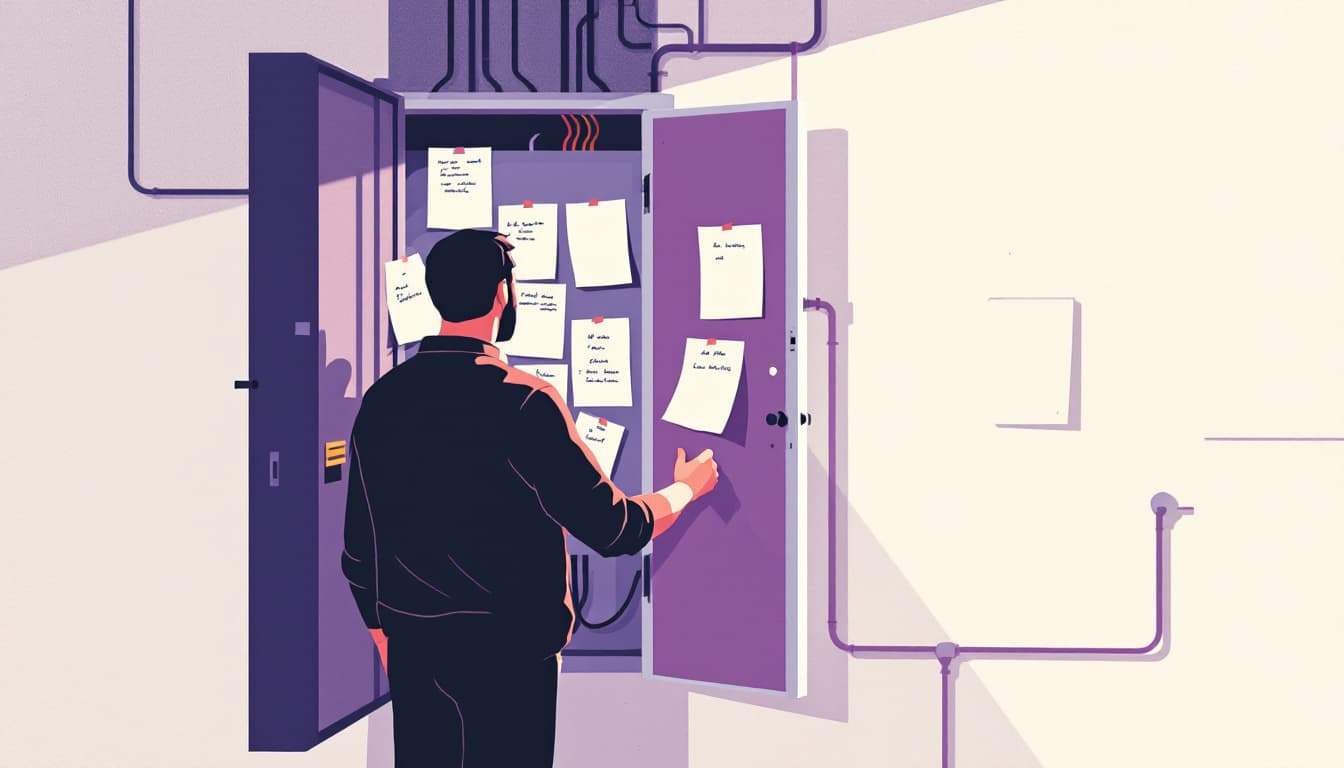
A piece circulating on Hacker News this week reframes a debate that has largely focused on whether AI-generated code is reliable. The author's argument is more unsettling: the deeper problem is that developers — AI-assisted or not — increasingly have no idea what the systems they're working on are for, how they were originally architected, or what constraints shaped early design decisions. The post argues that AI coding tools accelerate this erosion by making it trivially easy to generate plausible-looking solutions without requiring the practitioner to understand the underlying system's intent or structure.
The discussion thread on Hacker News drew substantial engagement in the days following publication, with practitioners across industries describing the same pattern: codebases where no living team member can explain why a critical component works the way it does, only that it does. AI pair-programming tools, the argument goes, are being layered on top of this existing knowledge vacuum rather than fixing it, producing output that is syntactically coherent but architecturally disconnected from the system's actual purpose.
This is not a new phenomenon — "tribal knowledge loss" and "documentation debt" have been engineering complaints for decades — but the pace appears to be compressing. Where a team might previously have had two or three years before institutional knowledge degraded to dangerous levels after key engineers departed, AI-assisted churn may be shortening that window significantly, according to the perspectives surfaced in the piece.
What the general tech press coverage of this story tends to skip is the infrastructure dependency angle that matters to anyone thinking about continuity and resilience. The systems described — whose internal logic is now opaque even to their operators — are not academic projects. They include the software layers managing utilities, logistics networks, supply chain coordination platforms, and municipal services. When the humans maintaining those systems don't understand the system's original design intent, the failure modes during a stress event (a cyberattack, a cascading hardware fault, an unusual demand spike) become genuinely unpredictable rather than merely inconvenient. Engineers who have audited SCADA and industrial control environments for resilience have noted for years that "unknown unknowns" in system behavior are far more dangerous than known weaknesses — and the dynamic described in this week's Hacker News discussion is a factory for producing exactly those unknown unknowns at scale.